The Colored Bible: When Scripture Becomes a Stained-Glass Window
Related Episode
S2E1: The Colored Bible — How a Highlighter Becomes TheologyThe altar doesn’t look like what you think.
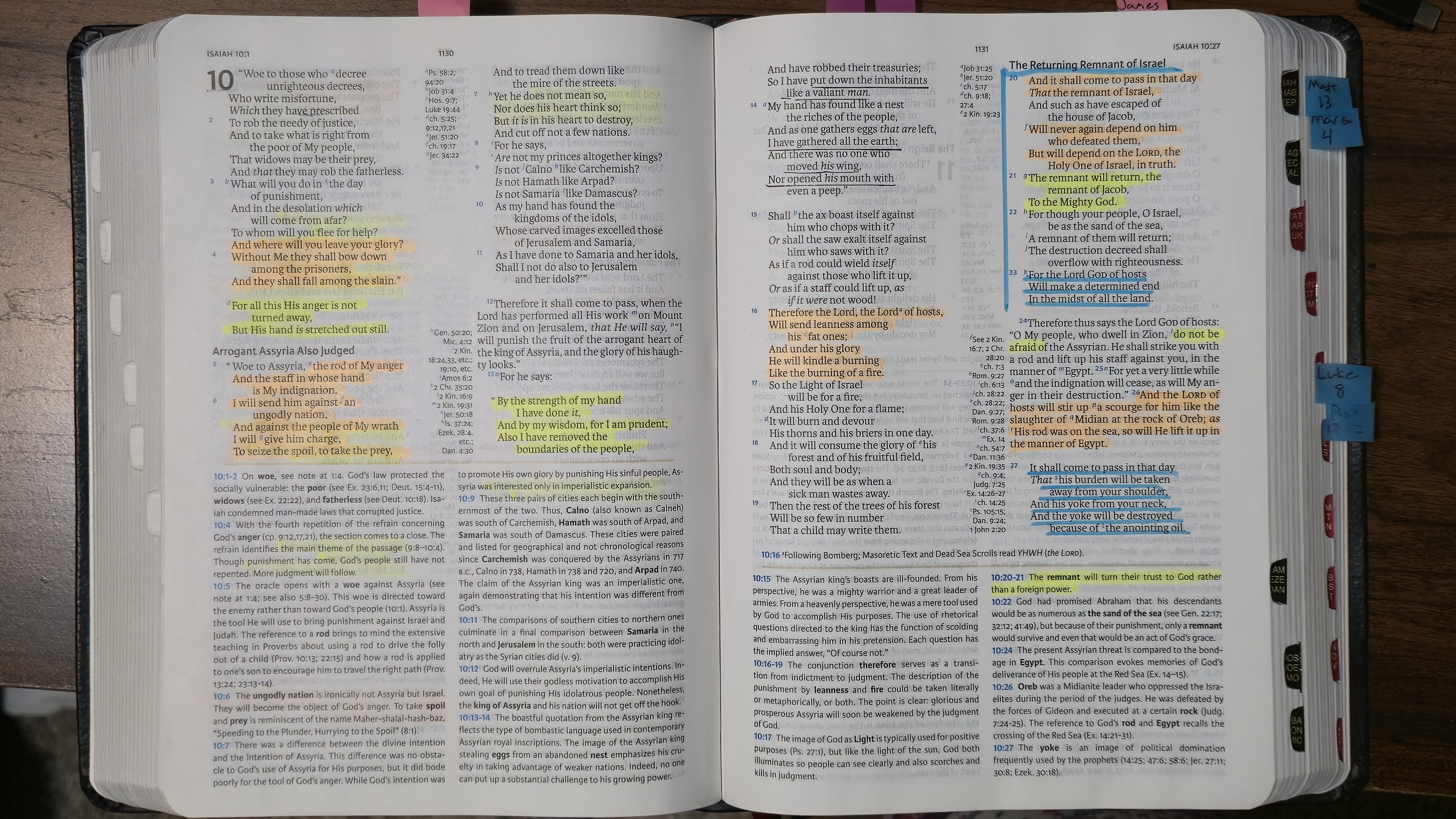
No golden chalices or ornate crosses. Just a desk. A Holman Study Bible, three highlighters, a black pen, an 1864 Emphatic Diaglott, and—crucially—no phone. This is where the real work happens. Where Scripture stops being an academic exercise and becomes a stained-glass window through which the living God speaks.
Welcome to Season Two of The Upside-Down Kingdom. If Season One was demolition—tearing down the performance-driven, achievement-oriented fortress of modern Christianity—Season Two is construction. But we’re not building another system. We’re learning a posture.
The Posture That Changes Everything
Most people approach Scripture with the wrong question. They ask, “What can I get from this?” or “How can I apply this to my life?” These are achievement questions—the same performance framework that Season One dismantled.
The right posture begins with the right question: What are You saying tonight?
This isn’t semantic wordplay. It’s the difference between extraction and reception. Between treating Scripture as a resource to mine and recognizing it as a conversation to enter. The difference between coming to achieve and coming to receive.
This is what I call disciplined receptivity—a phrase that sounds like an oxymoron but captures the tension perfectly. Discipline without receptivity becomes legalism. Receptivity without discipline becomes sentimentalism. But together? They create the conditions for genuine encounter.
The Four Colors of Conversation
The colored Bible isn’t a study method. It’s a record of conversations with God. Each color captures a different dimension of how the Spirit speaks:
Orange: Rhema/Kairos
The personal, immediate word. The verse that leaps off the page and grabs you by the throat. Matthew 13:44 exemplifies this perfectly—the man who finds treasure in a field and sells everything to buy not just the treasure, but the entire field. Most people focus on the treasure. But the field matters more. The field is the context, the place where God chooses to hide His gifts.
Orange moments are field moments. They’re when the Spirit says, “This. Right here. Right now. For you.”
Yellow: Logos
The eternal, load-bearing truth. The theological bedrock that holds everything else up. Ephesians 2:8-9. Isaiah 6:3. Romans 3:23. These aren’t personal words—they’re universal declarations that remain true whether you feel them or not.
But here’s the most yellow verse in the entire Bible: Revelation 13:8, which speaks of “the Lamb slain from the foundation of the world.” Before sin entered. Before the fall. Before humanity even existed. The cross wasn’t Plan B. It was always Plan A. That’s logos. That’s yellow.
Blue: Prophetic/Eschatological
Underline only. No highlighting. Blue captures the already-but-not-yet tension of the Kingdom. Isaiah 53:5—“By His wounds we are healed”—is simultaneously accomplished fact and future hope. Daniel 7:13-14, Habakkuk 2:14, Revelation 21:5. These verses live in the space between promise and fulfillment, between what Christ has done and what He will complete.
Black Pen: Canonical Echoes
The shepherd appears 189 times across Scripture. Hosea 11:1 finds its fulfillment in Matthew 2:15. The lost sheep trail winds from Psalm 119 through Jeremiah 50 to Ezekiel 34 and finally to Luke 15. These aren’t coincidences. They’re conversations—the Spirit speaking across centuries, weaving themes and images into a unified narrative.
Black pen work requires patience. It’s detective work. It’s following breadcrumbs through the entire canonical forest to see how God tells one story through many voices.
Watch · Wait · Work
These four colors organize around a simple three-word framework: Watch · Wait · Work.
Watch for the Spirit’s movement. Pay attention to what stirs, what stops you, what won’t let go. This is active receptivity—alert but not aggressive.
Wait for understanding. Don’t rush to application. Sit with the text until it sits with you. Let the conversation develop naturally.
Work with what you’ve received. Not the work of performance or achievement, but the work of integration. How does this word reshape your understanding? How does it challenge your assumptions? How does it change your posture toward God and others?
Non-Sequential Reading and Sacred Disruption
Here’s where it gets really subversive: the Spirit doesn’t give you a reading plan.
Kata idian—Mark 4:34—“privately, to His own disciples.” The Spirit teaches privately, personally, according to His own curriculum. Sometimes you need Genesis 1. Sometimes you need Lamentations 3. Sometimes you need to camp in John 17 for three weeks.
This isn’t license for biblical illiteracy or cherry-picking verses. It’s recognition that spiritual formation follows spiritual logic, not academic logic. The goal isn’t to cover material. The goal is to be covered by the material—to let Scripture read you as much as you read it.
The Record of Transformation
Over time, your colored Bible becomes something extraordinary: a visual record of your transformation. You can literally see how God has been speaking to you. The orange moments that marked seasons of breakthrough. The yellow truths that anchored you through storms. The blue promises that sustained you through waiting. The black connections that revealed the depth of His design.
This isn’t about creating a pretty Bible. It’s about creating a sacred space where the living God meets an analytical mind and forges something new. Where the Kingdom’s upside-down logic becomes visible in three colors, one pen, and the radical posture of disciplined receptivity.
The Scandal of Divine Conversation
The real scandal isn’t that God speaks through Scripture. The real scandal is that He wants to. That the God of the universe desires conversation with you. That He hides treasures in fields and gives you eyes to see them. That He speaks in colors and echoes and moments that take your breath away.
The colored Bible is simply a way of saying yes to that scandal. A way of sitting with Scripture until it becomes what it was always meant to be: not a book about God, but a window through which God speaks.
Ready to learn the complete methodology behind the colored Bible? This is just the beginning. The full episode dives deeper into each color, explores the theology of disciplined receptivity, and reveals why non-sequential reading might be the most important spiritual discipline you’ve never practiced.
Listen to S2E1: The Colored Bible and discover how Scripture becomes a stained-glass window when you approach it with the right posture.
Next: The Breadcrumb Trail—how to follow the Spirit’s curriculum through the canonical forest.