S2E2: The Breadcrumb Trail — Capturing What the Spirit Gives You Off the Desk
What do you do when the Spirit gives you something at 6 AM in the car — and you have nowhere to put it?
This episode of The Upside-Down Kingdom confronts the gap that most discipleship dies in: the gap between revelation and retention. Most of what the Spirit gives you doesn't happen at the desk. It happens on a one-hour commute to the factory. It happens mid-weld, when the arc is running and your hands are full. It happens at the grocery store, when a thread you've been holding for weeks pulls suddenly taut. The desk is sacred. But the desk isn't the only address where God speaks.
Drawing from Habakkuk 2:2 (NKJV) — "Write the vision and make it plain on tablets, that he may run who reads it" — this is deep theology built around a single confronting question: what are you doing to steward what the Spirit deposits in you when you can't sit down to receive it? The prophet didn't just hear; he wrote. He made it plain. He created an architecture of capture so the vision could be carried into ground he had not yet walked.
This is exegesis turned into practical reformed spirituality. Not a productivity tool. A stewardship discipline. Because what you don't capture, you don't carry. And what you don't carry, you can't share.
The episode walks through Seth's own field-tested system — built around a PLAUD NotePin that records meditations during welding shifts, transcribed by AI, structured into a meditation document, and then played back through ElevenReader in his own AI-cloned voice. Stay with that. A former AI developer is using AI as the diagnostic mirror for the voice of God — testing the spirits in his own articulation. The hidden leaven surfaces when he hears himself speak. The pride he didn't notice. The analytical mind trying to retake the throne. This is christian transformation through the discipline of the captured word.
Then comes Joseph. "You meant it for evil, but God meant it for good" (Genesis 50:20, NKJV). The breadcrumb trail isn't only forward — it is also backward. The Spirit gives you the language to read the past correctly. The mirror is not just for the present. It re-narrates everything you survived. That is the deepest gospel transformation a believer can experience: the ability to look back at the wreckage and see the Shepherd who was always there.
In this episode you'll discover:
- Why Habakkuk 2:2 commands the prophet to write — and what biblical interpretation has always known about visions that go uncaptured
- Why Matthew 12:34 (NKJV) functions in two registers — pressure and the Secret Place — and what this teaches about the kingdom truth that lives in the heart's overflow
- How Romans 10:17 and Luke 6:48 anchor the whole stewardship discipline of christian discipleship
- Why the night is sacred alone time — watchman intercession, not work — and what this reveals about reformed theology of prayer
- The mirror principle: how to use modern tools to test what your spirit is actually saying when no one else is listening
Plus: a closing challenge — catch one thing. Just one. The whole episode distilled into a single act of obedience.
Key Scriptures (NKJV): Habakkuk 2:2 | Matthew 12:34 | Romans 10:17 | Luke 6:48 | Proverbs 20:5 | Genesis 50:20 | James 1:23–25 | Mark 4:9
---
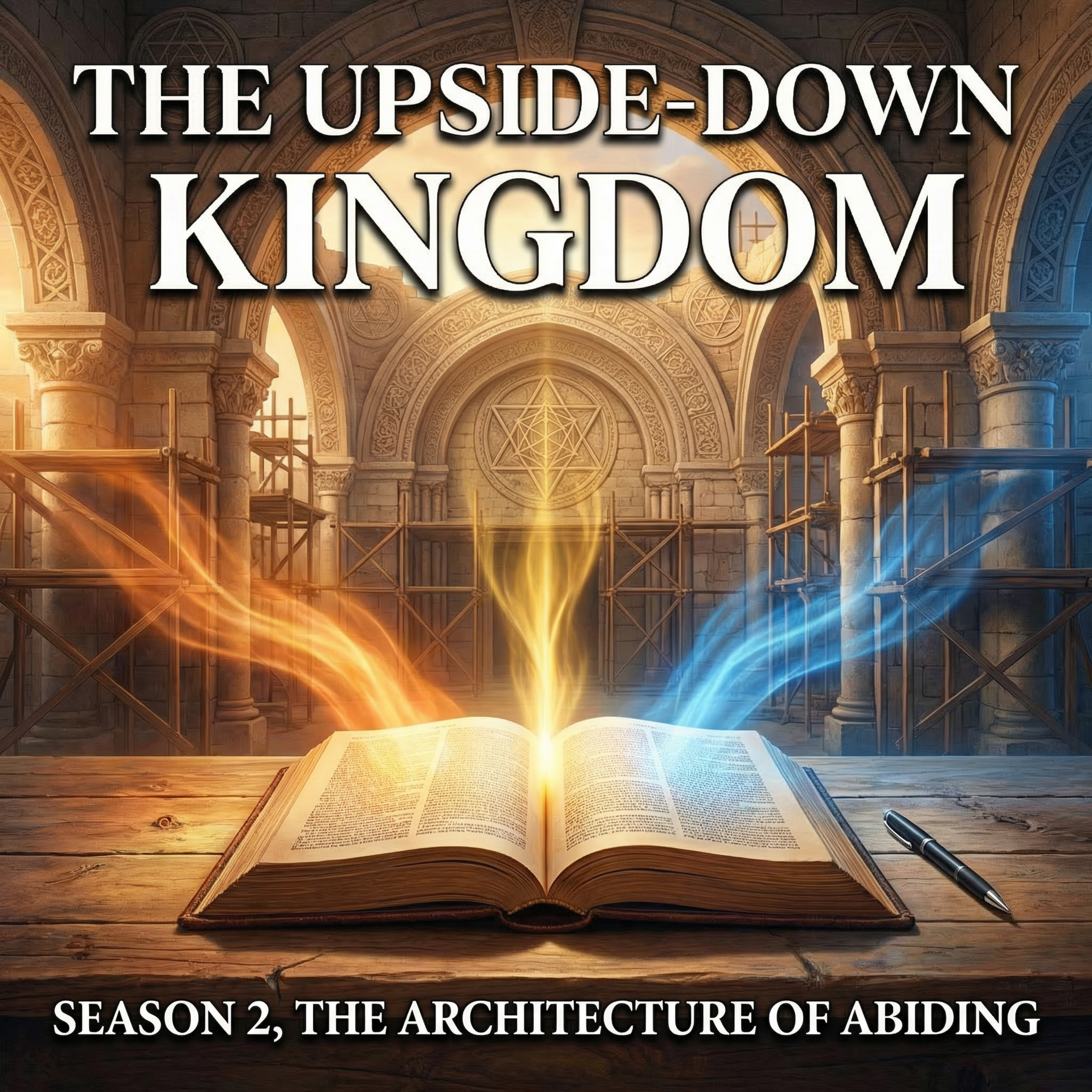
The Upside-Down Kingdom — Season 2: The Architecture of Abiding. Phase 1: The Toolbox. The desk is where it starts. The breadcrumb trail is how you carry it everywhere else.
He who has ears to hear, let him hear.
 Amazon Music
 Apple Podcasts
 Castamatic
 Castbox
 Castro
 Goodpods
 iHeartRadio
 Moon FM
 Overcast
 Pandora
 Pocket Casts
 Podbean
 Podcast Addict
 Podcast Guru
 Podcast Republic
 Podurama
 Spotify
 YouTube