S2E3: Watch, Wait, Work — The Posture That Separates Discipline from Performance
Three words. Three prophets. One posture. And one confronting question: what's the difference between spiritual discipline and spiritual performance — and why has the Western church confused the two for so long?
This episode of The Upside-Down Kingdom unpacks deep theology hidden in three Minor Prophets — Habakkuk, Zephaniah, Haggai — held together by a fourth (Zechariah) the modern church has largely forgotten how to read. The exegesis is precise; the application is direct. We have been trained to think of discipline as output: consistency, routine, a rigorous spiritual schedule that impresses God into showing up. But that is not discipline. That is fortress-building. Real discipline is positioning yourself where God can find you — and then staying there.
WATCH — Habakkuk does not open his book with praise. He opens with a complaint — an accusation against God. "How long, Lord, must I call for help and you do not listen?" (Habakkuk 1:2). Then he climbs the wall. Sets himself on the rampart. Waits to hear what God will say and what he will answer when corrected. That posture, deliberate and open to correction before forming a conclusion, is what watching actually looks like. Out of it comes one of the most foundational declarations in all of biblical theology: "The just shall live by his faith" (Habakkuk 2:4) — three New Testament books hang on that single verse.
WAIT — We have no theology of delay. Our culture, including our church culture, has turned waiting into a problem to be solved, a gap to be filled. Zephaniah opens with severe judgment on a specific spiritual numbness: the belief that God neither acts nor notices. That complacency is itself judgment. But follow the arc through: "The Lord your God in your midst, the Mighty One, will save; He will rejoice over you with gladness, He will quiet you with His love, He will rejoice over you with singing" (Zephaniah 3:17). God singing over you. Waiting is not empty delay. Waiting is purification. What comes out the other side is the version God could actually sing over.
WORK — Haggai is the prophet of practical obedience. Short book. No grand vision. Just: look around. The returning exiles came home from Babylon to rebuild the temple. Then life happened. The work got hard, resistance came, time passed — and they finished their own paneled houses while the temple lay in ruins. They had not abandoned God. They had simply let the urgent crowd out the essential. God's response is not a lecture. It is three words: "Consider your ways" (Haggai 1:7). And when the people obey, God responds immediately: "I am with you." Not "I was." Not "I will be once you get it right." Present tense. Costly obedience precedes the felt sense of God's presence — not the other way around.
THE FOURTH PROPHET — Zechariah 3 holds all three words together. Joshua the high priest stands before God in filthy garments — the Hebrew literally means excrement — with Satan at his right hand to accuse. And God does not wait for Joshua to clean himself. He removes the iniquity first.
In this episode you'll discover:
- Why Habakkuk's complaint is biblical authority modeled in real time — and what reformed theology has always understood about honest prayer
- Why Zephaniah 3:17 is not a sentimental verse — it's the deepest gospel transformation in the Minor Prophets
- Why Haggai's "Consider your ways" is christian discipleship in five Hebrew syllables
- How Zechariah 3 anchors the whole posture in covenant theology — and why the verdict precedes the work
- Why your watch-post might be a car, a lunchroom, or the desk after midnight — and why the address doesn't matter
Key Scriptures (NKJV): Habakkuk 1:2 | Habakkuk 2:1–4 | Habakkuk 3:17–19 | Zephaniah 1:12 | Zephaniah 3:17 | Haggai 1:4–8, 13 | Zechariah 3:1–5
---
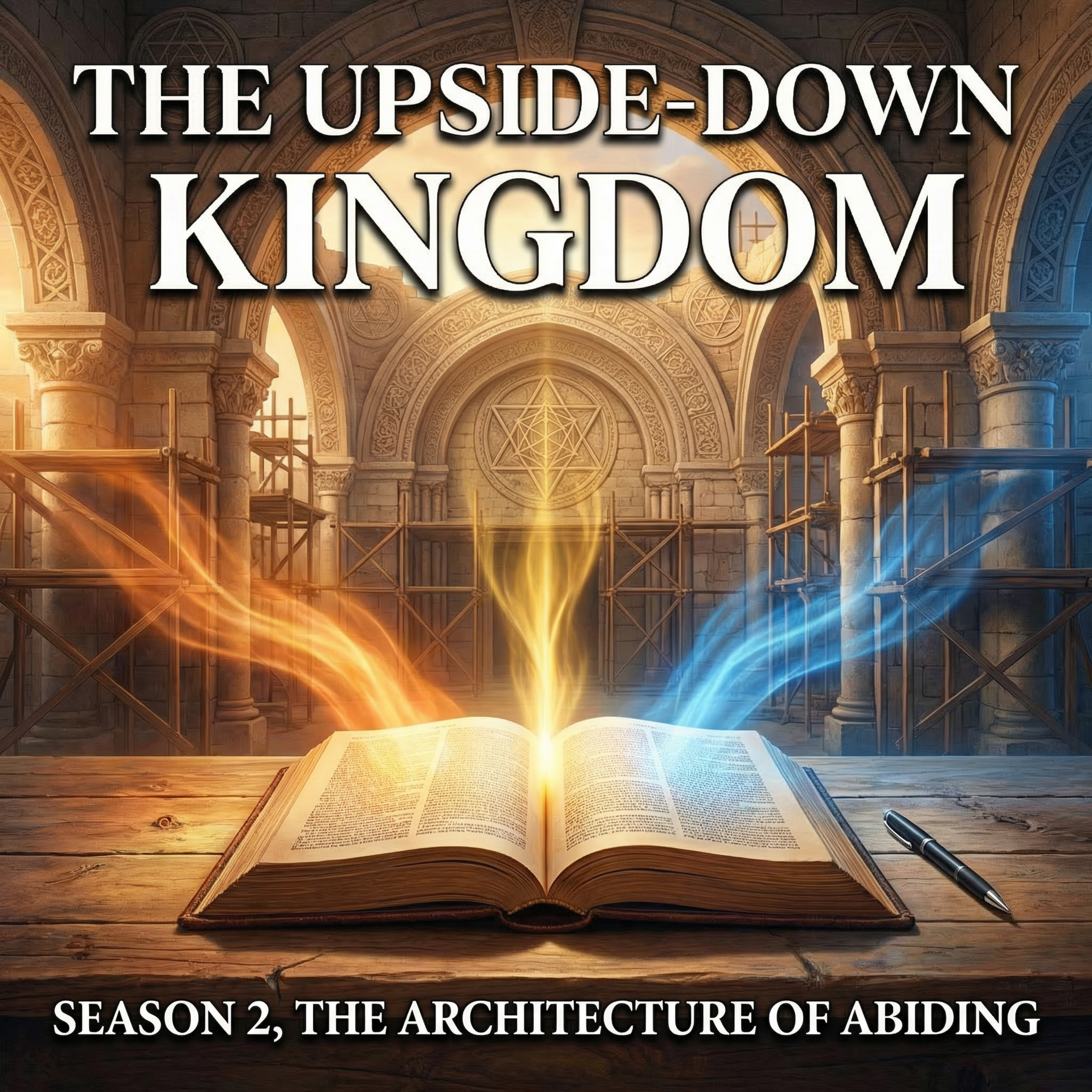
The Upside-Down Kingdom — Season 2: The Architecture of Abiding. Phase 1: The Toolbox. This is the posture that lets every other tool work.
He who has ears to hear, let him hear.
 Amazon Music
 Apple Podcasts
 Castamatic
 Castbox
 Castro
 Goodpods
 iHeartRadio
 Moon FM
 Overcast
 Pandora
 Pocket Casts
 Podbean
 Podcast Addict
 Podcast Guru
 Podcast Republic
 Podurama
 Spotify
 YouTube