S2E5: Confessing Hope — The New Covenant Confession Most Believers Were Never Taught
What if the New Covenant's primary act of confession isn't the one you were trained for?
Most of us learned a single direction of confession: name your failure, ask for forgiveness, return to God through the door of what went wrong. The cross is where the covenant begins. But Hebrews 10:23 — "Let us hold fast the confession of our hope without wavering, for He who promised is faithful" — gives the new covenant priest a second and primary act. The Greek is homologia tēs elpidos: the spoken declaration of hope. Hold fast. Without wavering. This episode of The Upside-Down Kingdom unpacks that second act — what it is, and why it matters.
This is deep theology with priestly precision. Reformed theology has always known the verdict precedes the transformation. But the practical implication has been largely lost: if God has covenantally forgotten your sins, what are you actually doing when you rehearse them back to Him? The scandalous gospel says you have been given a different vocabulary entirely, and most believers have never been taught how to use it.
HEBREWS 10:17–18 — THE COVENANT OF DIVINE FORGETTING. Hebrews quotes Jeremiah 31: "Their sins and their lawless deeds I will remember no more." This is not metaphor. It is covenantal architecture. God *actively, covenantally* does not retain them. Which raises a confronting question: if God has forgotten — what are you doing when you rehearse them back to Him?
HEBREWS 10:23 — THE PRIESTLY ACT. Homologia tēs elpidos. The spoken declaration of hope. The writer has been building toward a new priesthood throughout chapters 7–10: not the Levitical priests who offered sacrifice repeatedly, but a new order whose sacrifice has been made once for all. The new covenant priest doesn't keep returning to the altar. He holds fast the confession of what the altar already accomplished.
HEBREWS 6:19 — THE ANCHOR. Hope in the New Testament is not optimism. It is an anchor — "sure and steadfast" — gripping a reality beneath what is visible from the surface. The confession of hope is what you say when you drop it: I am forgiven. I am the temple of the Holy Spirit. The kingdom of God is within me. He who promised is faithful.
1 CORINTHIANS 3:16 + LUKE 17:21 — WHAT YOU'RE CONFESSING. Paul writes with the Greek emphatic ouk oidate — "Do you not know?" — that you are God's temple and His Spirit lives in you. Jesus says in Luke 17:21 that the kingdom of God is not an external event: "the kingdom of God is within you." The new covenant priest confesses these realities not to earn them, but to agree with what the covenant has already established.
This is exegesis turned into surgical transformation. Not therapeutic comfort. Priestly formation. The prophetic confrontation embedded in this episode is gentle but unmistakable: what you confess primarily shapes what you believe you actually are. Confess failure primarily and you live as a failing person who occasionally receives grace. Confess hope primarily and you live as a priest who occasionally returns to the altar.
In this episode you'll discover:
- Why Hebrews 10:17–18 reframes the entire conversation about confession — and what reformed theology has always taught about the legal status of forgiven sin
- Why homologia tēs elpidos is the priestly vocabulary modern bible study has lost
- How Hebrews 6:19 anchors christian transformation in something below the waterline
- Why 1 Corinthians 3:16 + Luke 17:21 are the two scriptures the new covenant priest confesses on repeat
- How the confession of hope connects directly to the Secret Place from S2E4 — same room, different language
Key Scriptures (NKJV): Hebrews 10:17–18 | Hebrews 10:23 | Hebrews 6:19 | Hebrews 11:1 | 1 Corinthians 3:16 | Luke 17:21
---
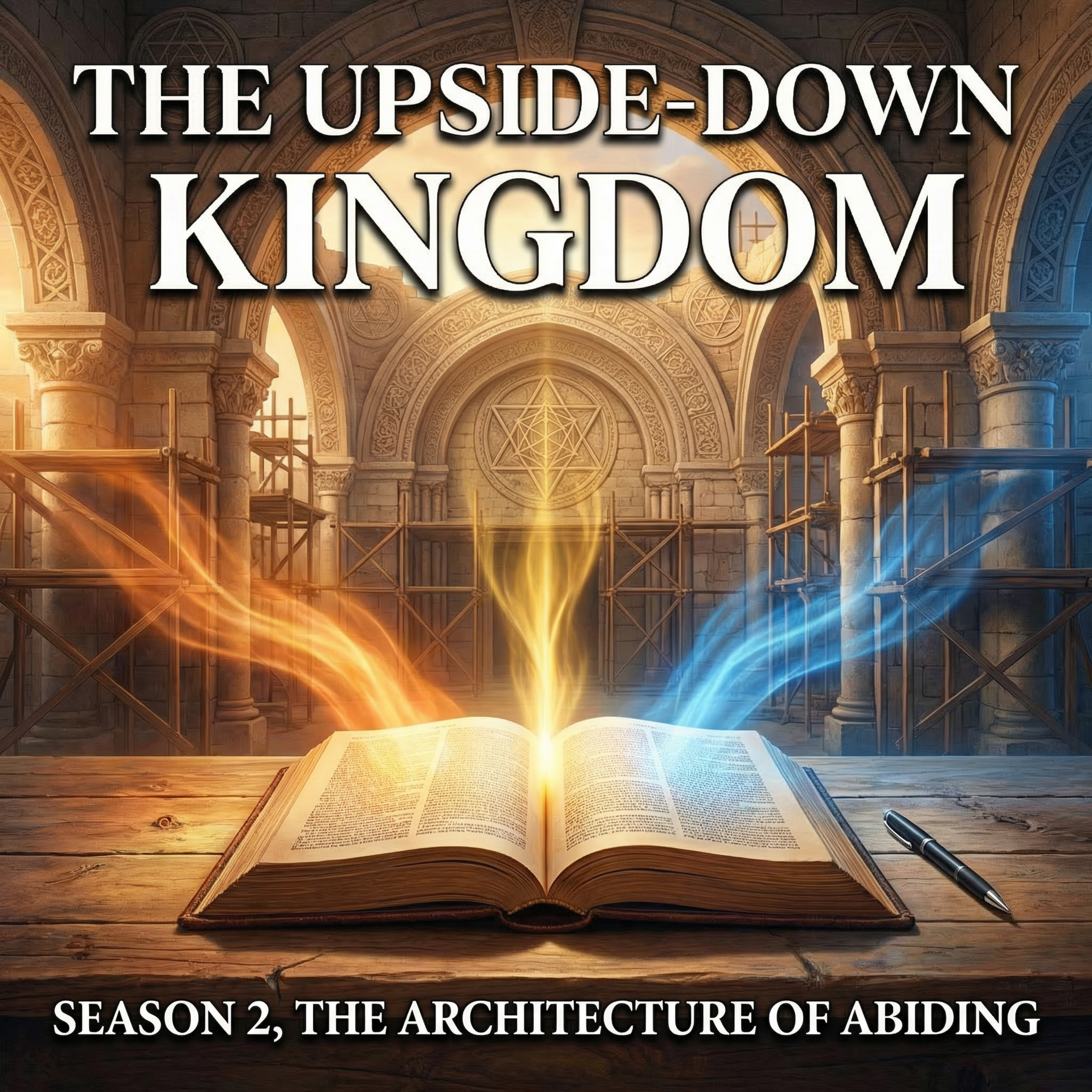
The Upside-Down Kingdom — Season 2: The Architecture of Abiding. Phase 1: The Toolbox. The Secret Place is the room. The Confession of Hope is the language you speak inside it.
He who has ears to hear, let him hear.
 Amazon Music
 Apple Podcasts
 Castamatic
 Castbox
 Castro
 Goodpods
 iHeartRadio
 Moon FM
 Overcast
 Pandora
 Pocket Casts
 Podbean
 Podcast Addict
 Podcast Guru
 Podcast Republic
 Podurama
 Spotify
 YouTube